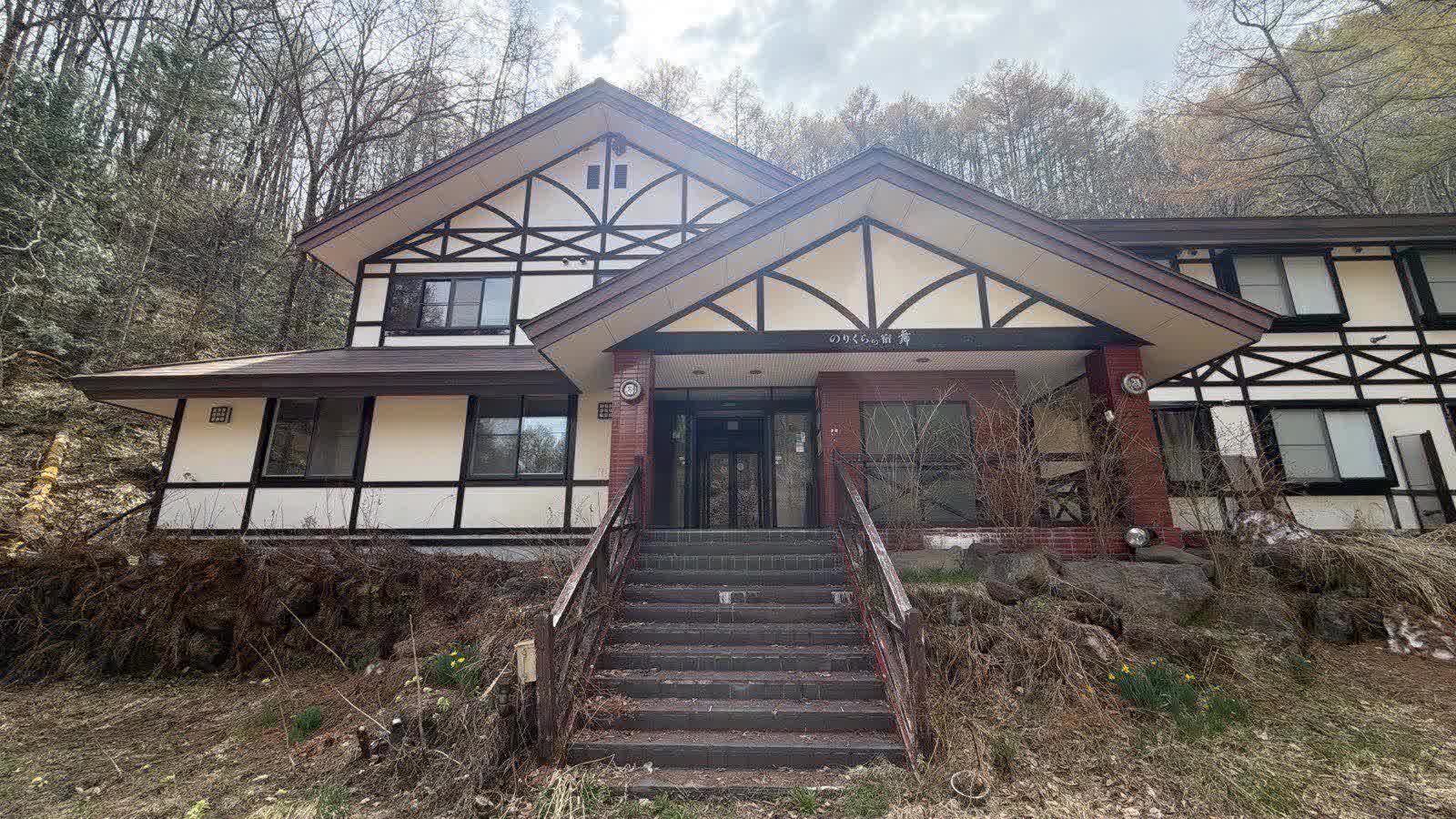
Norikura Kogen is easy to romanticize: white birch woods, hot spring steam, deep winter snow, and the broad volcanic shoulder of Mt. Norikura rising above the village. But the lifestyle case for the Highland Compound at Norikura is stronger when it is grounded in the facts. This is a four-structure property in Matsumoto’s highlands, with a licensed ryokan, a chalet-style pension, two detached villas, and more than 25,000 square meters of land including private-road interests.
Local property link: View the full Norikura compound listing, including the on-site ryokan, pension, two villas, gallery, video links, and land documentation summary.
The setting matters as much as the buildings. Norikura Kogen sits inside Chubu Sangaku National Park at the southern end of the Northern Alps, and the local tourism association frames the area around scenery that changes dramatically by season. In practical terms, that gives a future operator more than one demand story. Winter is skiing and snowshoeing. Spring is snow walls and late alpine thaw. Summer is cool-air trekking, waterfalls, cycling, and stargazing. Autumn is foliage, soba, hawk migration, and photography.
For a hospitality buyer, that range is the whole point. The asset is not dependent on one postcard moment.
The Four-Season Rhythm
Seasonality That Can Be Programmed
Norikura Kogen works because the annual calendar has texture. The local tourism association notes that spring arrives slowly from late April to early May as the snow melts; by mid-June, azaleas color Ichinose Meadow; summer brings access toward Tatamidaira at roughly 2,700 meters; autumn foliage moves down from the summit side from mid-September into early November; and winter turns Zengoro Falls into an icefall and the plateau into a ski and snowshoe landscape.
That creates a useful programming sequence for a small resort or retreat:
- December to March: ski stays, snowshoe walks, frozen-waterfall tours, hot spring recovery, and quiet winter writing retreats.
- April to June: snow corridor trips, skunk cabbage, spring trekking, and low-crowd onsen weekends.
- July to August: cool-climate escapes, family outdoor stays, cycling, stargazing, and guided waterfall walks.
- September to November: foliage photography, new-soba season, birdwatching around Shirakaba Pass, and long-stay work retreats.


Climate as a Lifestyle Advantage
The climate data supports the lifestyle pitch. The Japan Meteorological Agency’s 1991-2020 normals for nearby Nagawa show an annual average temperature of 8.5 C, January at -3.5 C, and August at 20.7 C, with 1,946.8 mm of annual precipitation. Nagawa is not the exact property site, but it is a nearby highland observation point and a better proxy for Norikura life than lowland Matsumoto. For buyers trying to understand the lived climate, the message is clear: cold winters, comfortable summers, and a much cooler annual profile than Japan’s urban basins.


Skiing Is Small-Scale, but Real
Slope Data and Village-Scale Access
Mt. Norikura Snow Resort is not Hakuba, and that is part of its appeal. It is smaller, quieter, more local, and directly tied to the highland village. The ski area publishes a 500-meter vertical profile, from a 1,500-meter base to a 2,000-meter top, with 20 courses, a 5,000-meter longest run, and a course mix listed as 40% beginner, 45% intermediate, and 15% advanced on its official resort profile. The same page lists eight lifts, including two quads and three pair lifts.


Demand Signals and Operating Risk
For the 2025-2026 season, tenki.jp’s ski-area profile listed operating dates from December 13, 2025 through April 5, 2026, with no night skiing and a 1,500-2,000 meter elevation range. Operating details can change with snow and management decisions, but the published season window is long enough to anchor winter lodging.
Demand is not theoretical. Blue Resort Norikura’s own June 2025 operating report says the resort recorded 43,332 visitors in the 2024-2025 season, excluding season-pass holders, up from 37,529 the prior season. The same report says lift-ticket revenue rose from ¥103.188 million to ¥125.559 million, rental revenue rose from ¥22.322 million to ¥31.084 million, and overall sales were up 21% year on year. The resort also confirmed that the 2025-2026 season would continue under the local operating company while it considered longer-term operating structures.
There is caution inside that data. The same report openly discusses ski-population decline, climate-change pressure, and the difficulty of running a mountain resort with limited capital. That is exactly why Norikura should be pitched honestly: not as a frictionless ski investment, but as a rare operating base in a community that still has winter demand, infrastructure, and local commitment.
Restaurants and Food Culture Nearby
What Guests Can Eat Without Leaving the Plateau
The dining scene is not urban, but it is deeper than a casual visitor might expect. The Norikura Tourism Association’s restaurant, cafe, and bar guide notes that a number of unique restaurants have opened in recent years and warns visitors to check seasonal hours, which is exactly the rhythm of a mountain village: excellent when you plan ahead, frustrating if you expect city convenience.
Soba as Local Identity
The food culture starts with soba. Norikura’s own food guide describes Bansho soba as native buckwheat grown at around 1,200 to 1,300 meters, in a climate suited to buckwheat because of shorter sunlight hours and sharp temperature differences. That gives local menus a story beyond “mountain noodles.” It is agricultural identity.
For guests at the compound, the nearby restaurant mix can support several styles of stay:
- Soba and local food: Soba Restaurant Nakanoya, Soba-dokoro Gassho, and Restaurant Chirol appear on the official Norikura food map, with specialties such as 10-wari soba, soba with tempura, and handmade soba.
- Casual hearty meals: Abby Road, Maple, Oasis, and Hikokigumo are listed with set meals, curry pilaf, sanzokuyaki, burgers, and local bowls.
- Cafe and evening use: Spring Bank is listed as a cafe and bar, while Primavera, Alum, Fukinoto, and Come-s cover pasta, pizza, steak sets, hamburg steak, and beef stew.
- Ski-slope dining: Blue Resort Norikura lists Rest House Yamaboshi, Sanbondaki Rest House, and Restaurant Norikura on the ski-area side, with seating capacities of 120, 259, and 250 respectively.
That matters for an operator. A future Norikura compound does not need to internalize every guest meal. It can run breakfast, private dinners, event dining, or onsen-and-stay packages while still sending guests into the local food network. For a destination built around nature, that is healthier than isolating the guest inside a single building.
Nature Is the Main Amenity
The biggest amenity is not inside the property. It is the national park.
Ponds, Waterfalls, and Alpine Roads
The National Parks of Japan guide describes Chubusangaku National Park as a Northern Alps landscape with peaks including Mt. Norikura at 3,026 meters, a broad trail network, and roughly 90 mountain huts across the park. Around Norikura itself, the local tourism association highlights Ichinose Meadow, Maime Pond, Ushidome Pond, Sanbontaki, Bansho Otaki, Zengoro Falls, Sengenbuchi, and easy plateau trails through forest and wetlands.


This gives the compound strong positioning for low-impact, high-value stays:
- guided waterfall walks after breakfast
- summer stargazing from Ichinose Meadow
- snowshoe routes to frozen Zengoro Falls
- slow cycling and e-bike itineraries
- autumn photography trips
- onsen recovery after skiing or hiking
- corporate offsites where the activity is walking, not drinking in a conference room
Zero Carbon Park Context
Norikura also has a sustainability story that is unusually concrete. National Parks of Japan notes that in 2021 the Ministry of the Environment designated Norikura Kogen as Japan’s first Zero Carbon Park, supporting local efforts around electric vehicles, renewable energy, trail maintenance, and nature-positive tourism. For buyers thinking about regenerative hospitality, that gives the property a context that aligns with the direction of the place rather than fighting it.
The Lifestyle Buyer
Not Passive, but Rare
The Norikura compound is not for someone who wants a passive second home with no operational complexity. The current property record already makes that clear: it includes onsen-related rights and approvals, national-park constraints, known repair issues, septic-system diligence items, and a multi-building land package that must be understood carefully before acquisition.
But for the right buyer, those complexities are paired with rare upside. A single acquisition brings together a licensed ryokan, a companion pension, owner or staff accommodation potential, onsen adjacency, ski proximity, and enough land to feel like an alpine campus rather than a roadside inn.
The lifestyle it sells is specific:
You wake before guests and see the larch line brighten. Breakfast is simple and local: rice, pickles, mountain vegetables, miso, eggs, coffee. Winter guests walk to the ski area or head out for snowshoeing. Summer guests leave for waterfalls and return sunburned and hungry. Autumn guests ask where to eat new soba. By 9 p.m., the village is dark enough that the sky becomes part of the product.
This is not luxury as marble and imported furniture. It is luxury as air, silence, hot water, snow, food, and room to move.
Why the Data Supports the Dream
The case for Norikura is strongest when the romance and the operating facts are held together.
- The property itself is substantial: four structures, hospitality licensing, two villas, and over 25,000 square meters of land including private-road interests.
- The climate is meaningfully alpine by Japanese standards: nearby Nagawa averages 8.5 C annually, with January below freezing and August just above 20 C.
- The ski area has a published 500-meter vertical, 20-course layout, and recent visitor numbers in the low-40,000 range, depending on source and season definition.
- The wider Nagano ski market is still active: Nagano Economic Research Institute’s May 2026 preliminary survey reported 5.124 million users across 22 major prefectural ski areas through March 2026, up 4.3% year on year and back above five million for the first time in 11 years.
- The food network exists, but is local and seasonal, which creates partnership opportunities rather than eliminating the need for hospitality.
- The national-park and Zero Carbon Park context gives Norikura a credible sustainability identity.
The best buyer will not flatten Norikura into a generic ski lodge. They will use what is already there: soba in autumn, icefalls in winter, snow corridors in spring, cool-air retreats in summer, and onsen as the thread through all of it.
That is the lifestyle worth selling: a highland base in a protected mountain landscape, with enough infrastructure to operate and enough quiet to still feel discovered. The next step is the property-level diligence: review the full Highland Compound at Norikura listing, then use the regional data above to judge whether the lifestyle and operating model fit your plans.