Island akiya listings are easy to misunderstand.
From a distance, the story is simple: a quiet island, an old wooden house, a slower rhythm, a coastline, and the possibility of disappearing into a different version of Japan.
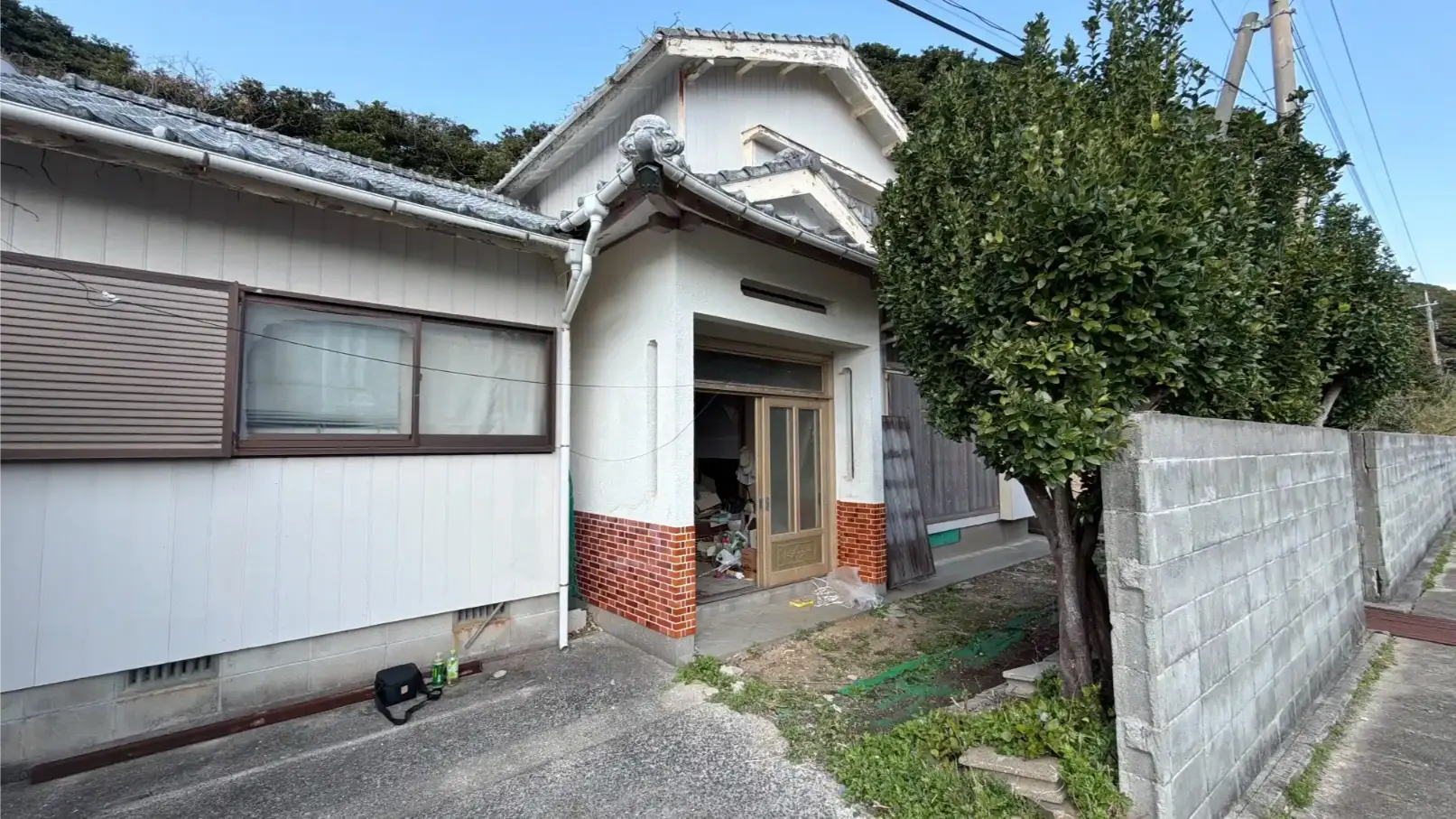
The Naru Island akiya in Goto, Nagasaki has that atmosphere, but the listing record is more useful because it also has the uncomfortable details. It describes a 1982 wood post-and-beam house in Goto City’s Naru-cho Okushi, with 136.74 square meters of floor area over two above-ground floors, attic storage, and a seven-parcel landholding totaling 3,442 square meters.
It also comes with April 2026 inspection findings.
That is what makes the property worth discussing seriously.
The Island Story Is Real
Naru Island sits within the Goto archipelago, one of Japan’s most remote inhabited island groups. The local area record describes Naru as part of a UNESCO-recognized island landscape known for hidden Christian heritage, pristine coastline, and a slow island rhythm.
This is not a suburban house with a rural label. It is an island property, and that changes everything: access, logistics, renovation planning, community fit, supply runs, weather, and the buyer’s daily relationship with distance.
Nearby anchors help make the setting legible:
- Egami Church: a 1918 wooden church and island landmark tied to the area’s Christian heritage.
- Naru Ferry Port: the gateway to Fukue Island, with ferry access listed at 30 to 45 minutes and onward connections toward Nagasaki.
- Naru Island Heritage Center: a visitor center with displays, maps, and context for the island’s hidden Christian past.
- Shutoketou Beach: a cove beach with clear water, snorkeling, and fishing opportunities.
- Shironotake Observation Deck: a hilltop viewpoint across the Goto archipelago and open Pacific.
That is the emotional case. It is strong.
But it is not enough.
The Inspection Changes the Conversation
The listing is unusually useful because it surfaces condition issues from an April 2026 home inspection instead of asking buyers to rely on atmosphere.
The inspection source notes an April 21, 2026 inspection and an April 25, 2026 report issued by Sakurajimusyo Kyushu / Nico Co., Ltd. The building snapshot lists wood post-and-beam construction, a 1982 build date, two above-ground floors, 136.74 square meters of floor area, attic storage, and 3,442 square meters of land across seven parcels.
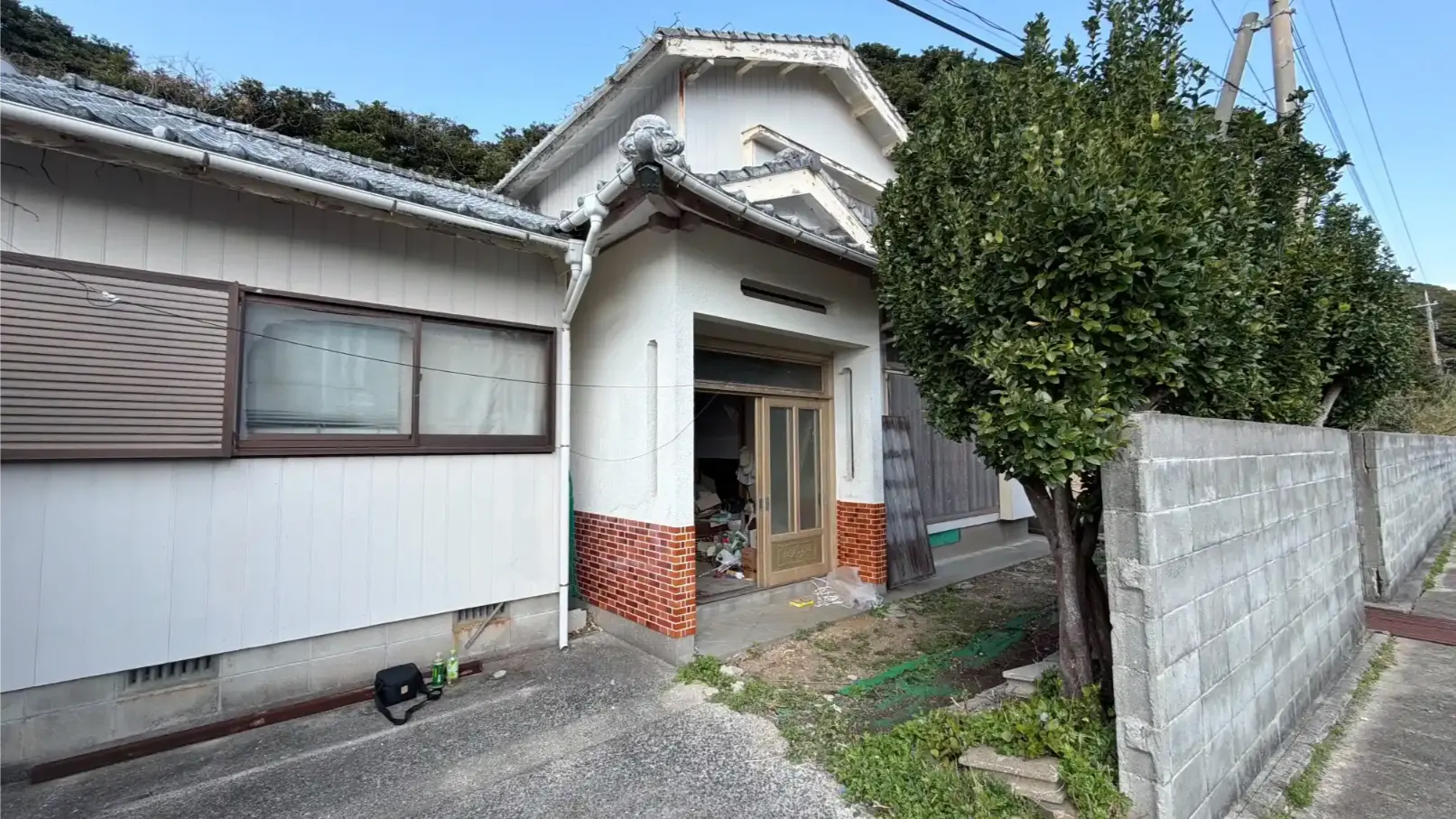
The utility status is equally direct. Water service was active at inspection. Electricity was not energized, and the electric meter had been removed. Gas was not opened. Hot-water equipment was reportedly used previously, but operation was not confirmed. The septic tank area was clean, but the tank condition was not inspected.
These details are not reasons to reject the property. They are reasons to budget with discipline.
The Repair Priorities Are Not Hidden
The inspection findings identify several renovation priorities:
- possible active or continuing rainwater leakage around the kitchen ceiling
- black mold and ceiling damage in the kitchen area
- living room floor sinking linked to deteriorated subfloor material
- floor and tatami deterioration in Japanese Room A
- moisture-related wood deterioration around the living room and Japanese Room A
- exterior wall and roof-material deterioration consistent with age
That is the difference between browsing island-house photos and evaluating an actual acquisition.
A buyer needs to understand roof and wall conditions, trace leak sources, clear stored belongings, inspect concealed floor and ceiling areas, reconnect utilities, confirm septic function, and price the work before treating the purchase as a lifestyle decision.
In many akiya listings, those problems appear after the buyer is already emotionally committed. Here, they are part of the starting point.
The Seven Parcels Matter
The landholding is another reason the listing is not just a small-house story. The record describes 3,442 square meters across seven parcels.
That scale could matter for a future owner who wants gardens, research space, storage, small-scale creative use, or a broader island base. It also adds diligence: boundaries, access, maintenance, taxes, title review, and realistic plans for land that may not all be equally usable.
The right buyer will not see the parcel count as free upside. They will see it as scope.
Who Should Look at This
The listing’s natural audience is not someone chasing the cheapest possible akiya. It is better suited to buyers prepared for a documented renovation project on Naru Island, restorers who want a 1982 wooden house with inspection findings already surfaced, and creatives or researchers drawn to one of Japan’s storied island communities.
That buyer needs patience. Island renovation is not city renovation. Materials, contractors, transport, scheduling, and municipal coordination can all move differently. The house may be affordable relative to urban property, but the project cost is not just the purchase price.
Still, there is a reason this listing stays compelling. It combines an actual island setting with actual condition information. That is rare.
Why It Deserves Serious Attention
Naru Island gives the buyer a story that cannot be faked: ferry access, hidden Christian heritage, remote coastline, a wooden house, and a slower island ecology.
The inspection gives the buyer something even more valuable: friction before fantasy.
That is the right order. First, understand the work. Then decide whether the island life still calls to you.
For the right person, it may.
View the full Naru Island akiya listing.
For serious buyers, this article is an editorial introduction, not a substitute for the full inspection report, current registry checks, building review, utility reconnection confirmation, septic review, legal advice, or renovation estimates.