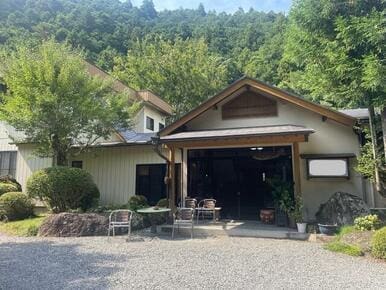
Not every hospitality opportunity in Japan needs to become a luxury resort. Some of the more compelling properties are quieter: a working inn format, a strong bathing feature, enough land to breathe, and a region with cultural depth that rewards slower travel.
The Hot Spring Inn in Nambu, Yamanashi fits that category. The listing record describes a hot spring inn with 721 square meters of floor area across three structures on 3,900 square meters of land, priced at JPY 50,000,000. Its standout feature is a private onsen constructed from massive ancient stones.
That is not a normal house with a nice bath. It is an inn-scale property with a bathing identity already embedded in the asset.
The Bath Is the Center of the Story
The listing’s strongest feature is specific: a private onsen built from massive ancient stones. That detail matters because hospitality in rural Japan often succeeds when the experience is simple, physical, and repeatable.
Guests may forget the exact size of a room. They remember the bath.
An ancient-stone onsen gives a future owner something more grounded than vague wellness branding. It creates a reason to stay, a reason to photograph the property, and a reason to return in colder months when mountain quiet and hot water become the whole product.
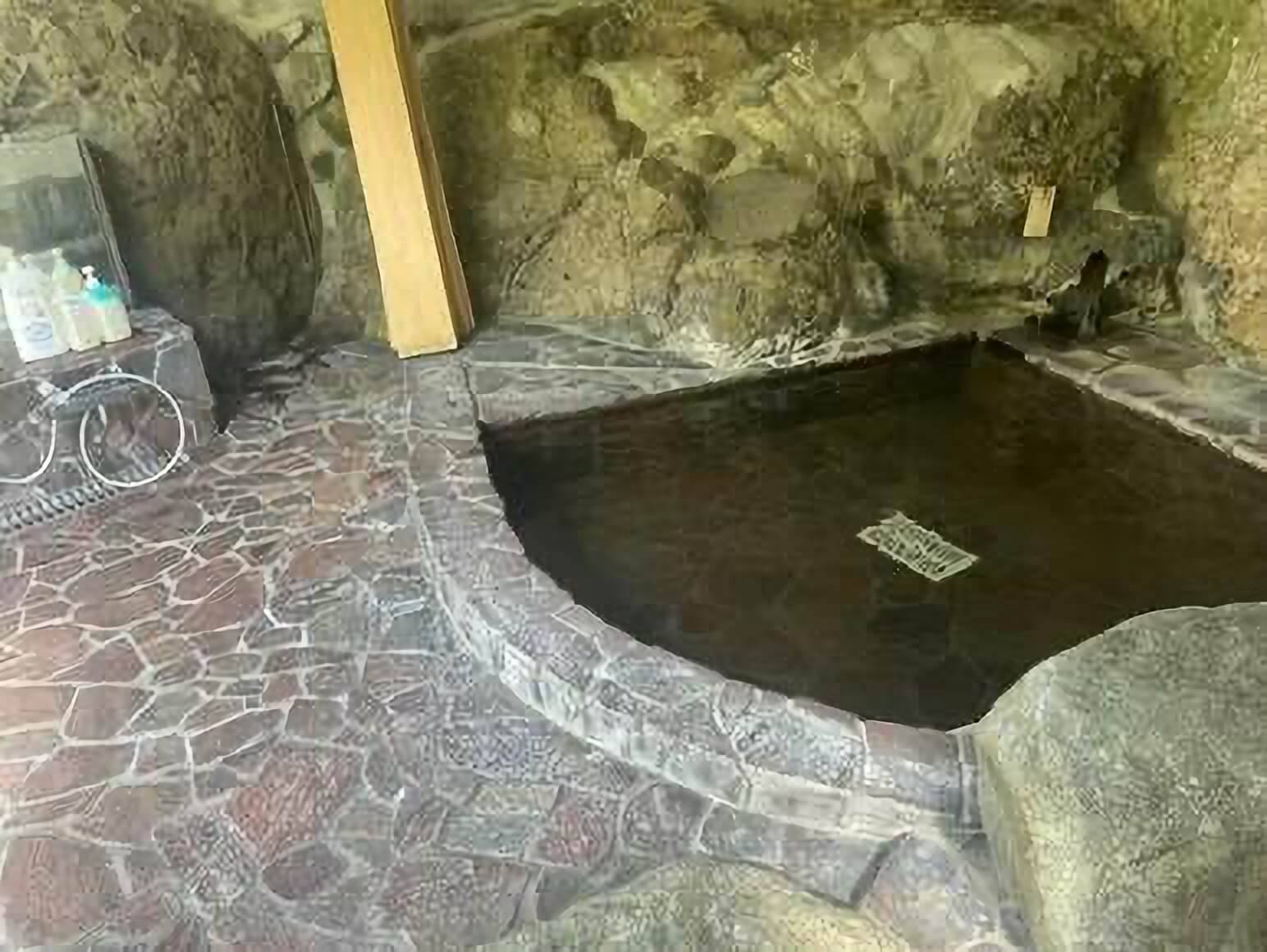
The important question is how to protect that identity while making the rest of the operation functional. The bath should not be a decorative afterthought. It should drive the guest experience, renovation priorities, photography, operating rhythm, and pricing strategy.
Nambu Rewards Slow Guests
The local area record places the inn in Nambu, in southern Yamanashi’s Fujikawa valley. The region sits between Minobu’s ancient temples and the fast-flowing Fuji River, with mountain quiet, therapeutic springs, and Buddhist heritage.
That context gives the property a different rhythm from a beach house or ski lodge. It is better suited to guests who want restoration, temple visits, river landscapes, seasonal flowers, and a slower base in the mountains.
Nearby anchors make that practical:
- Minobusan Kuonji Temple: about 30 minutes by car, with 750 years of Nichiren Buddhist history, a 287-step cedar stairway, and Mount Fuji views on clear days.
- Shimobe Onsen: about 20 minutes by train, with a long hot spring history and low-temperature therapeutic mineral baths.
- Fujikawa River: a local natural anchor and one of Japan’s three fastest rivers, with gorge scenery and the summer Nambu Fire Festival along the banks.
- Oboshi Park: about 15 minutes west, known for roughly 2,000 cherry trees and Mount Fuji views in clear spring weather.
- JR Minobu Line: regional rail connecting toward Kofu and Shizuoka through the valley.
This is enough to support a curated stay. The property does not need to pretend it is in a high-volume resort town. Its case is quieter and more deliberate.
The Opportunity Is Operational
The listing points to inn business potential, private onsen, three structures, mountain setting, and 3,900 square meters of land. Those details suggest a buyer who thinks like an operator, not a collector.
The most plausible future is not a generic renovation. It is a compact hospitality model built around bathing, mountain food, temple access, river landscapes, and small-group stays. The three-structure format may allow a future owner to separate guest areas, owner or staff use, storage, or phased renovation, depending on current building conditions and approvals.
That flexibility is valuable, but it also means the acquisition should begin with a practical plan:
- What is the current condition of each structure?
- Which building becomes the revenue center first?
- What bath, plumbing, heating, and water systems need immediate review?
- How many guests can be served comfortably without overbuilding the operation?
- What local suppliers, guides, temples, or food producers can become part of the stay?
The point is not to make the property busier than the valley can support. It is to make the experience coherent enough that quiet becomes a strength.
The Buyer Has to Like the Work
There is a reason properties like this do not fit the standard second-home story. A hot spring inn is not passive. It asks for management, maintenance, guest service, local relationships, safety review, and careful seasonal planning.
The reward is that the core experience is real. The bath is not imagined. The buildings exist. The land is substantial. The surrounding area already has temple, river, onsen, and rail context. A buyer is not starting from nothing.
They are inheriting a hospitality assignment.
Why This Listing Matters
For Akiyaz, the strongest property stories are the ones where reuse feels specific. The Nambu inn has that specificity.
It is not merely “a rural property in Yamanashi.” It is a three-structure hot spring inn with an ancient-stone bath, 721 square meters of floor area, 3,900 square meters of land, and a mountain-valley setting tied to Minobu, Shimobe Onsen, the Fujikawa River, and the JR Minobu Line.
That is enough raw material for a focused hospitality concept.
The future buyer should not flatten it into a lifestyle fantasy. They should build around what the property already offers: hot water, stone, valley air, temple history, and the kind of silence that urban hotels cannot manufacture.
View the full Nambu, Yamanashi hot spring inn listing.
For serious buyers, this article is an editorial introduction, not a substitute for current registry checks, building review, onsen and utility confirmation, legal advice, operating-license review, or repair estimates.